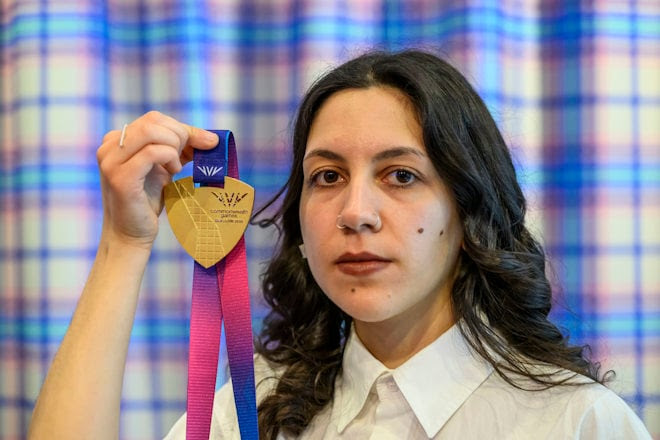
Bonaventure Ikeoha
The Glasgow 2026 Commonwealth Games has unveiled its official prize medal, introducing a historic, inclusive design that incorporates braille and tactile elements for the first time in the Games’ history.
The medal was revealed at a special ceremony held at the The Glasgow School of Art, attended by Prince Edward, Duke of Edinburgh, who serves as Vice-Patron of Commonwealth Sport.
A total of 215 gold medals will be contested across 10 sports and six Para sports when the Games return to Glasgow from July 23 to August 2, marking the United Kingdom’s biggest sporting event of the summer. Of these, 47 gold medals will be awarded in Para sports, making it the largest fully integrated Para sport programme in Commonwealth Games history.




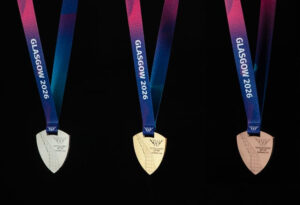
Designed by award-winning artist and The Glasgow School of Art Artist in Residence, Militsa Milenkova, the medal features a distinctive Reuleaux triangle shape — a first for the Games. The design draws inspiration from Glasgow’s coat of arms, industrial heritage, and cultural identity, incorporating elements such as the iconic Finnieston Crane and patterns reminiscent of Scottish tartan.
Milenkova, originally from Bulgaria, said the design reflects both her personal connection to Glasgow and her desire to create a meaningful symbol for athletes.
“I wanted the medal to stand out and resonate with athletes. Glasgow is my chosen home, and I wanted to capture that in a design that represents both the city and the spirit of the Games,” she said.
She explained that the triangular form was inspired by the city’s coat of arms, while the textured surface reflects the structure of the Finnieston Crane and the symbolism of tartan. The medal also features three distinct surface levels representing the podium tiers, alongside braille inscriptions to enhance accessibility.
The medal design emerged from a collaboration between Glasgow 2026 and The Glasgow School of Art, with resident silversmithing and jewellery artists invited to submit concepts to a selection panel comprising representatives from the Games, Commonwealth Sport, and independent experts.
The prize medal forms part of a broader creative programme that places local artistry at the heart of Glasgow 2026. Other elements include the official Games tartan designed by Siobhan Mackenzie, the Longines Countdown Clock at Central Station created by Agnes Jones, and the King’s Baton crafted by Tim Norman of the social enterprise GalGael.
Chair of Glasgow 2026, George Black, described the medal as a powerful symbol of the Games’ values.
“The prize medal represents the pinnacle of what athletes are striving for. This design is bold, meaningful, and rooted in Glasgow’s story, with inclusion at its core. For the first time, every athlete will receive a medal that reflects both their achievement and the values of these Games,” he said.
Scottish swimmer Duncan Scott, the country’s most decorated athlete, welcomed the design, praising its distinctive shape and inclusive features.
“It’s unique — you don’t see many medals like this. The braille is a great addition, and it’s exciting to see something that captures not just the achievement but the journey behind it,” he said.
President of Commonwealth Sport, Donald Rukare, said the unveiling reflects a reimagined vision for the Games.
“This medal embodies what Glasgow 2026 stands for — innovation, inclusion, and a willingness to do things differently. It will be instantly recognisable and a source of pride for athletes across the Commonwealth,” he noted.
Director and Principal of The Glasgow School of Art, Penny Macbeth, described the moment as a defining milestone for the designer.
“This is a remarkable achievement for Militsa. To see her work realised on such a global stage is both significant and inspiring,” she said.
Organisers say the medal and other creative elements reflect a deliberate effort to ensure Glasgow 2026 is not only hosted in the city but shaped by its people, culture, and creative heritage.