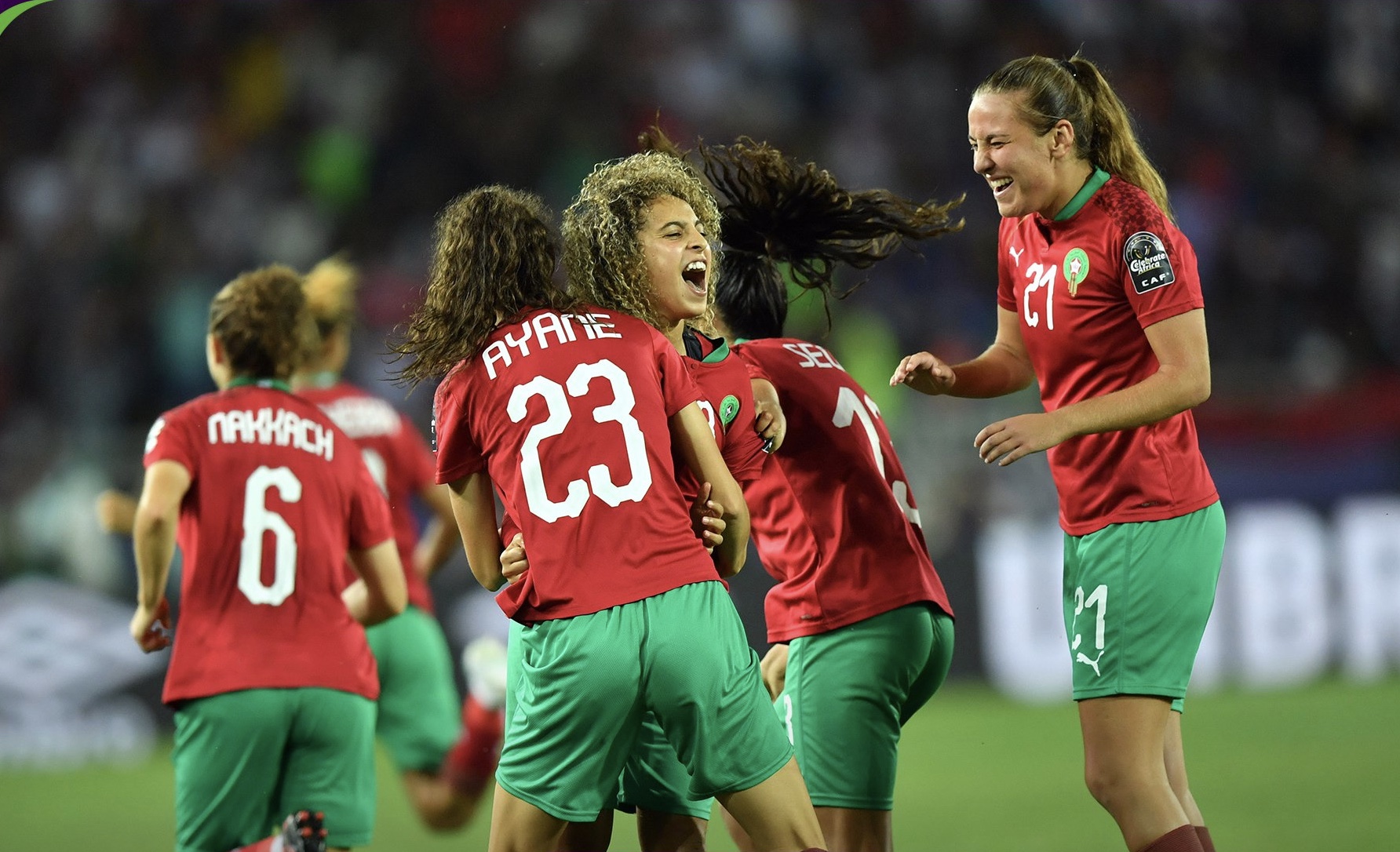
The 2022 edition of the Women’s African Cup of Nations has come to an end with host Morocco setting new records despite aiming to win on home soil but could not accomplish that feat.
The North Africans who used several of their World Cup-built stadiums to host the continental showpiece set a series of records over the course of the competition and Africafootunited.com looks critically at those feats.



Morocco became the first North African nation to host the women’s championship since the inception of the tournament in 1991. They also became the first North African to reach the final and, by extension, the semifinal.
No other North African country has come this far in the tournament, as it has been heavily dominated by West Africans with Nigeria in the lead.
Interestingly, Morocco also became the first North African country to qualify for the FIFA Women’s World Cup; they did it on home soil as host, and have set the tone for other North Africans to key into.
As host country, Morocco became the fifth nation to host the Women’s continental showpiece and reach the final. Others are Nigeria (1998, 2002, 2006), South Africa (2000), Equatorial Guinea (2008, 2012) and Cameroon (2016).
Only Nigeria and Equatorial Guinea have been successful on home soil in the Women’s continental showpiece as Morocco could not accomplish that feat as host.
Morocco’s forward Ghizlane Chebbak was not left out in helping her nation set new records. She emerged as the best player of the 2022 edition and also finished as the joint top goal scorer with Nigeria’s Rasheedat Ajibade and South Africa’s Hildah Magaia, with the trio having three goals each.
Ghizlane Chebbak also became the first North African player to win the best player award, and will be seen as the burden bearer of the nation when they land in Australia and New Zealand for the FIFA World Cup next year.