
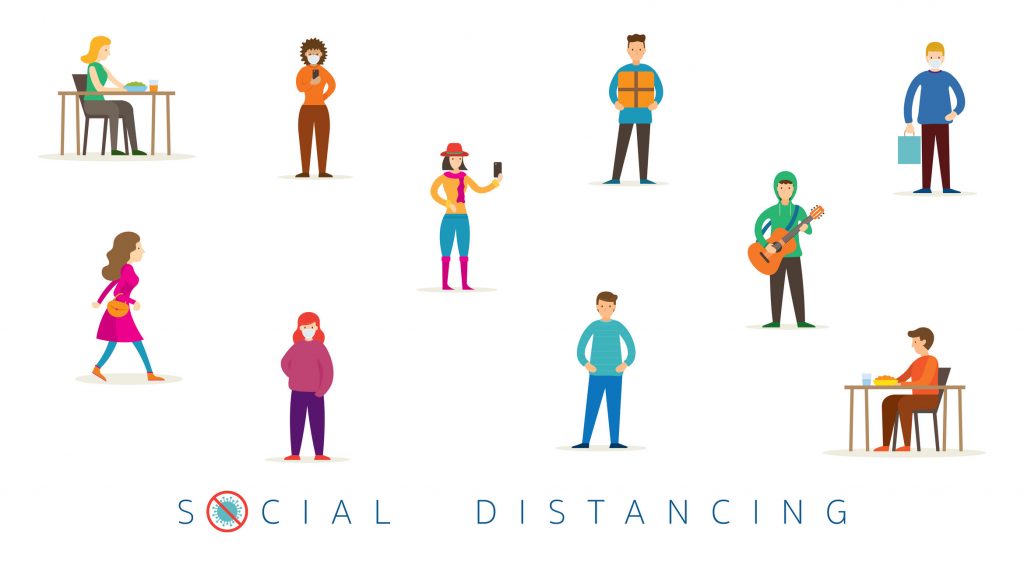
Nigeria urgently needs a medical solution to the crises caused by Corona Virus Disease popularly called COVID-19. Stay-at-home order, social distancing and personal hygiene approach currently in force are laudable; but additional steps are required to conclusively bring the menace of the virus to an end. Despite no vaccine or globally accepted cure for the dreaded disease, research points to meaningful facts about a local remedy. What is suggested here is not totally a new concept. It is a new approach?




The use of chloroquine has been suggested by Doctors. They have experimented with its use in the treatment of COVID-19 in China and France. Chloroquine is a well-known drug used to treat malaria and some other ailments. We recall that the Corona Virus is an organism with the outer layer made of lipids (fat). Studies revealed that a valid way to destroy the virus is by subjecting it to substances that disintegrate the fatty substances covering it. This is why common things like soap or alcohol-based sanitizers (65% alcohol) kill the virus. Once the virus gets into the human body, how to speedily deal with the virus and kick it out becomes the issue yet to be conclusively resolved.
Chloroquine
Chloroquine, by its formulation, is a weak base that diffuses into lysosomes and raise the PH level in the cell. When this happens, viruses that require acidic environment to flourish will begin to stunt and become subdued. Intuitive inferences based on reports indicate that Corona Virus (COVID-19), is one of those viruses that thrive on acidic environment, hence the efficacy of chloroquine in treating it.
Pieces of evidence abound to show that chloroquine is good therapy for coronavirus. There are two prongs to this: treating the infected person and preventing the uninfected person from getting the infection. That is curative and prophylactic therapy. In approaching this issue, there could be a curative dosage. And as well as a prophylactic dosage as defined prescriptions as possible options for the fight against the disease.
We are absolutely being reactionary in the fight. What we are currently not doing right is that we are treating the confirmed infected person only. And we are waiting for the virus to manifest on the presumed uninfected person and then we begin to treat the newly infected person. Unfortunately, before the virus manifests in the newly infected person within two weeks, it has spread.
The Approach
Given the behavioral pattern of the virus, any community or nation that wants to halt or beat the virus must be a step ahead. If you allow the virus to be on the same pace as you, the virus will overrun the community. A mass action approach is required in dealing with the crisis. This approach means administering chloroquine to everyone at the same time for a given duration.
Nigeria has a large number of pharmaceutical companies. They can urgently produce chloroquine tablets to meet the quantities needed by the population. Production and distribution may not pose a great challenge if the government pays attention to it.
As stated earlier, confirmed infected persons will be given curative doses. Others will be given prophylactic doses. Along the line, the third category of persons might emerge and that is the asymptomatic infected persons. These individuals may not have been tested and they are not showing any signs of infection. In this case, the prophylactic dose may be able to tackle the virus and if it does not, the symptoms will eventually manifest and curative treatment will be administered. This is without prejudice to the other antibiotic and multivitamin combinations that will be given to a confirmed infected person.
Let’s Take Action
This suggestion can be illustrated with a hypothetical country of 20 individuals. So, assuming 3 persons are confirmed to be infected and put in isolation receiving treatment. We assume that 4 persons have contacted the virus and without any symptoms. Since they have not been tested, nobody is aware of their health status. They are in their communities interacting freely. As they do so, a large number of people are coming in contact with the virus and transferring it from person to person. The assumption is that the other 13 persons are yet to contract the disease. Therefore, If the mass action approach is taken, everyone is given chloroquine therapy, the infected will recover. The yet to be infected will be fine. If the therapy is taken for a period of, say, 5 days, the human to human transmission will be curtailed significantly.
A point to note is that we need to take a proactive step in tackling this public health emergency. The benefit is that we can come out of these crises soon. Fortunately, chloroquine is not a new drug that requires rigorous testing before it can be used by a human. One may wonder how many Nigerians above the age of 25 have not taken chloroquine in the past to treat malaria. Chloroquine tablet is cheap and affordable. It is known that chloroquine has side effects, such as itching, on many. As it is in practice, such persons will be required to use Piriton. We can argue about the use of chloroquine therapy in combating COVID-19, the benefits still outweigh the risks.
The side effect of chloroquine is for a short period and it is reversible. So, what do we stand to lose if we take this approach?
In Conclusion
In conclusion, the emergency situation created by the rapidly spreading Corona Virus impacts on action speed. It prevents the usual 18-month clinical trial period for meaningful and verifiable actions to end the pandemic. Nigeria does not need to strictly toe the line of copying what is done in other countries abroad. We can be innovative in addressing the pandemic issue. Even if the suggestion made herein does not work, there must be homemade initiatives that can work.
Notwithstanding the stay-at-home order, social distancing, and other measures, the number of infected persons has been growing. The situation has gotten terribly bad in the USA, Europe, and Asia. They also did social distancing, personal hygiene, and expansive lockdown. In Wuhan, China, the lockdown lasted two and a half months. The fear is that the infection may soon get to the community transmission stage in Nigeria. One will only imagine what duration of lockdown that will stop the transmission of the virus.
Note
A dangerous aspect of lockdown for COVID-19 is that people with other medical conditions may die of inadequate care. Hunger will also devastate a large number of people. We know that a huge proportion of Nigerians live from hand to mouth.